
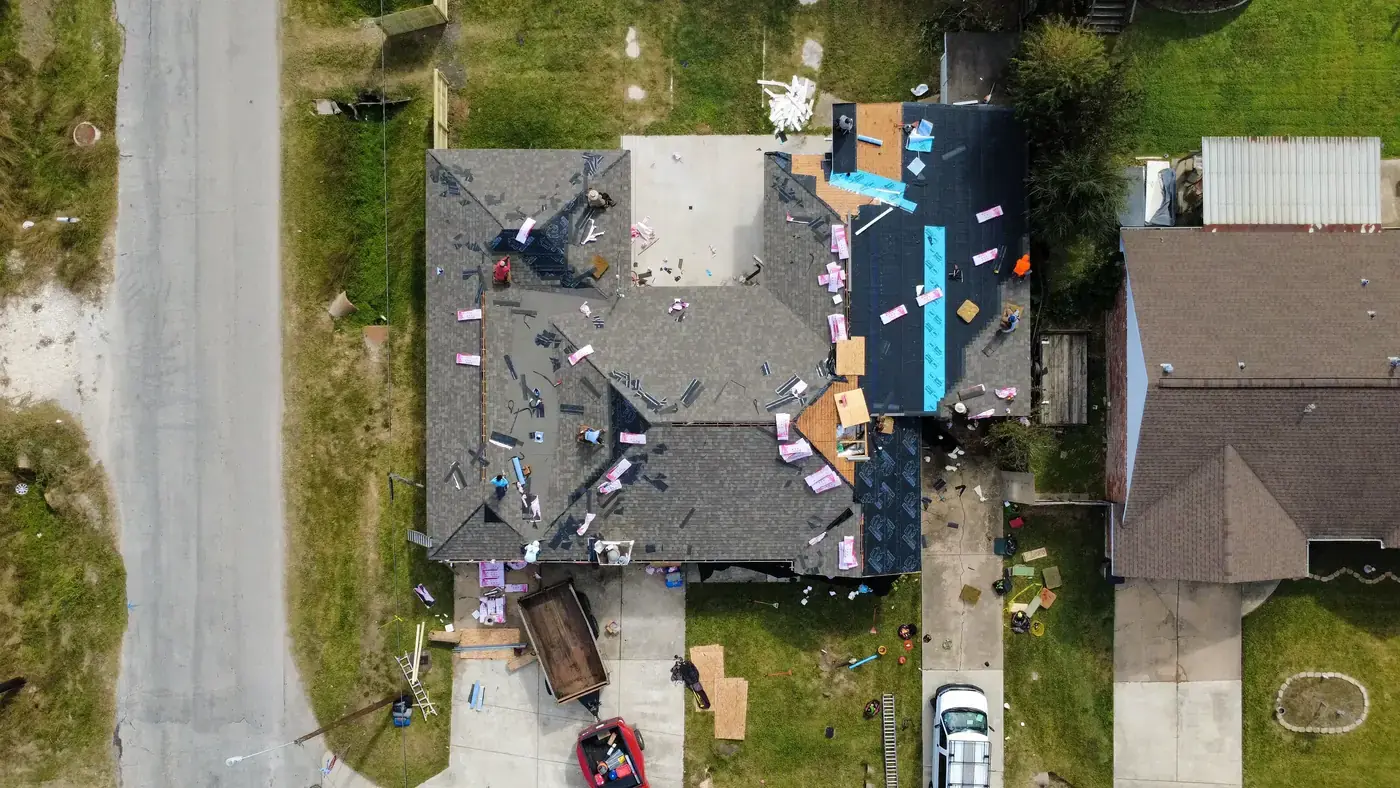
Storm damage restoration.
Hail and wind damage documented with dated photos, dry-in to stop the loss, and an honest read on whether it is a claim, a repair, or nothing. Greater Houston to Galveston.
On this page
What's included
- Emergency tarping and dry-in to stop active leaks
- Photo documentation of every slope
- Hail test squares and wind damage check on the roof
- Photos of the soft metals, vents, gutters, and screens that establish the event
- A dated photo report you keep whether or not you file
- A construction estimate for what the roof needs, if there is a claim
- On-site discussion of the observed damage with your adjuster
- Repair or replacement built to code, with windstorm inspection coordination for coastal homes
- Completion documents sent to your carrier so recoverable depreciation can be released
We are from here and we will be here next year. Our workmanship warranty does not leave town when storm season ends.
How we assess
Hail and wind leave different evidence, and both are easy to confuse with ordinary wear. We look for the specific things an adjuster looks for.
Hail. Bruising, which is a soft spot where the mat is fractured and granules are displaced, checked by hand. We mark a ten-by-ten test square on each slope and count hits, and we separate hail from blistering, foot traffic, and old mechanical damage.
Wind. Creased shingles that lifted and folded, broken seal strips, and missing tabs, usually concentrated on the slopes that faced the wind.
Collateral. Dents in gutters, vents, AC fins, and window screens. They date the event and support the claim.
Then the honest part. If the damage is under your deductible or the roof is simply old, we say so and put it in writing. A claim that is not worth filing is not worth filing.
The order of operations
Document
Photograph ground-level damage today: gutters, screens, debris, hail next to a coin. Then the complimentary inspection puts dated photos of every slope in your file.
Protect
If it is leaking, we tarp or dry in the spot to stop the loss. Keep receipts. Do not start permanent repairs before the adjuster has seen the roof.
Decide
Claim, repair, or nothing. We give you an honest read. If you file, we prepare the estimate and meet your adjuster. If you do not, you keep the photos.
What SRC never does. We are not a public adjuster. We do not negotiate your claim, we cannot guarantee coverage, and we do not waive or absorb deductibles. Texas HB 2102 makes that illegal. The full picture is on the insurance claims page.
What affects the price
On an insurance-funded job, your carrier's approved scope sets the numbers. SRC's estimate covers what the roof needs to be restored correctly; if the two differ, we document why so you can send it to your insurer. You pay your deductible and any upgrades you choose that the policy does not cover.
On a retail storm repair, the same factors as any repair or replacement apply: extent, pitch, access, matching, and material.
How ACV, deductible, and recoverable depreciation are paid is explained step by step on the FAQ page.
Timeline
After a major storm, inspections go in the order calls come in, with active leaks first. Then the claim sets the pace.
- Free inspection and photo report
- You file the claim; your insurer schedules the adjuster
- SRC meets the adjuster on site and provides the estimate
- Your insurer issues the scope and the first (ACV) check
- Materials ordered, install scheduled; one to two days on site for most replacements
- Completion documents sent; depreciation released
Adjuster scheduling is the step we do not control. Alicia keeps you posted at each stage so you know what is waiting on whom.
Warranty
SRC workmanship warranty on the work we did, and the manufacturer warranty on materials, registered by us. Storm damage after the install is not a warranty matter; that is what your insurance is for, and we document a new event the same way.
What you receive at closeout
- Final photos of the finished roof, every slope and the ground
- Completion documents and final invoice sent to your carrier for depreciation release
- Manufacturer warranty registration and the SRC workmanship warranty
- Windstorm inspection documentation for coastal and TWIA-area homes
- A copy of the full photo file, from the first inspection to the last day
Signs you need this
- Hail in the yard larger than a marble
- Dented gutters, downspouts, vents, or AC fins
- Shingle pieces or granule piles after wind
- Neighbors getting roofs replaced after the same storm
- A new leak after a named storm or a hail event
- Door-knockers on your street, which means the storm was real
Related services
- Insurance claims, in plain EnglishWhat SRC does, what you decide, what we never do
- Windstorm certification assistanceFor coastal and TWIA-area homes
- Roof replacementWhat a full replacement includes
- Storm seasonPreparing before the season and what to do after
- Texas roofing deductible lawHB 2102 and why your deductible is yours
- Preparing your roof for hurricane seasonBefore the storm
After the storm:
what people ask.
Insurance questions in more depth are on the insurance claims page and the FAQ page.
Should I sign with the first crew that knocks?
No. Get the damage documented first, then decide who does the work. A contingency agreement or assignment of benefits signed at the door can lock you in before you know whether you even have a claim. Read the storm chaser guide before you sign anything.
How do I know if I have hail damage?
From the ground you often cannot. Look for dents in gutters, downspouts, and AC fins, torn window screens, and granules piled at the downspouts. Bruising on the shingle itself takes a close look on the roof. That is what the free inspection is for.
Will filing a claim raise my rates?
That depends on your policy and your carrier, and we cannot answer it for you. Your agent can. What we can do is tell you honestly when the damage is minor enough that a claim is not worth filing.
Do I need to tarp the roof?
Only if it is leaking. If it is, call us. Emergency dry-in stops interior damage, and the cost is typically part of a covered claim. Keep the receipt for anything you do to stop the loss.
How long do I have to file?
Your policy sets a deadline for reporting hail and wind damage, commonly one year from the date of loss. Check yours. Late claims are a common reason for denial, so do not wait for the roof to leak.
Get it documented
before you sign.
(832) 729-0080
Send the address and what the storm left behind. We'll walk the roof, photograph every slope, and give you dated photos and an honest read. Leaking right now? Call, don't wait on the form.